Finding Speech Therapy for Stroke Recovery in Vancouver: A Local Guide
A stroke is a life-altering event that creates immediate, complex challenges for survivors and their families. In Vancouver, the journey toward recovery is rarely linear. While clinical care in hospitals is world-class, the transition from acute medical stabilization to long-term community rehabilitation often leaves families searching for clear answers. This guide serves as your local roadmap, bridging the gap between medical discharge and effective, personalized speech therapy. By understanding the landscape of recovery, you can better navigate the resources available across British Columbia to regain independence and communication skills.
Understanding Stroke and Its Impact on Communication
Types of Stroke: Ischemic vs. Hemorrhagic Stroke Traumas
A stroke occurs when blood supply to a part of the brain is interrupted or reduced, preventing brain tissue from getting oxygen. Ischemic strokes, the most common type, are caused by blockages in vessels, while hemorrhagic strokes involve bleeding into the brain. Both trigger significant trauma, necessitating immediate intervention to prevent further injury and start the process of neuroplasticity—the brain’s ability to reorganize itself.
Common Challenges: Aphasia, Slurring, and Word-Finding Difficulties
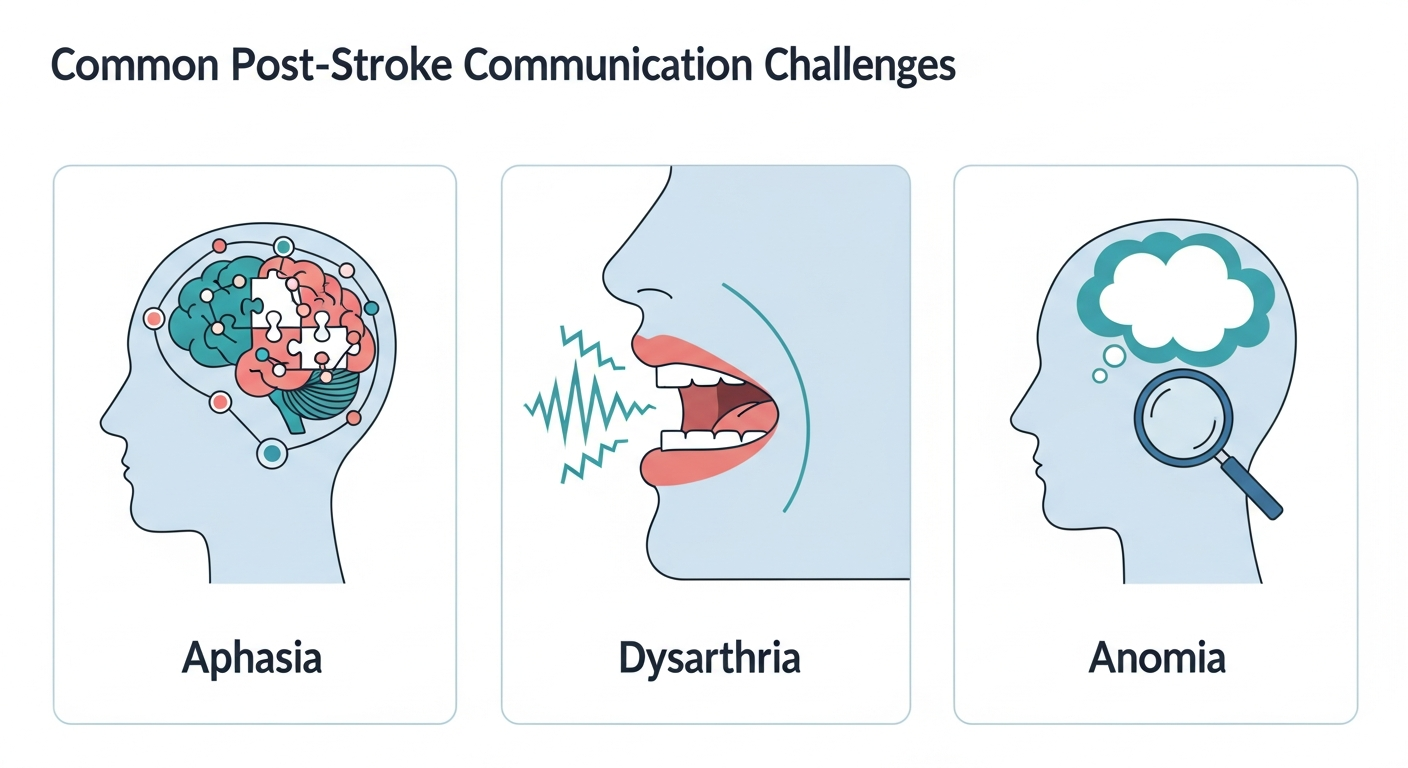
A visual breakdown of common post-stroke communication disorders: Aphasia (language processing), Dysarthria (motor speech execution), and Anomia (word retrieval).
The specific impact of a stroke depends on the location of the injury. Survivors frequently face aphasia, a disorder that affects the ability to process language, speak, read, or write. Others experience dysarthria, which manifests as slurred or slow speech due to muscle weakness. Word-finding difficulties, or anomia, represent another hurdle, where the "mental dictionary" becomes difficult to access, leading to frustration during daily interactions.
Beyond Speech: Addressing Cognitive-Communication and Dysphagia (Swallowing Difficulties)
Speech-Language Pathology (SLP) extends far beyond verbal output. It includes cognitive-communication, addressing issues with memory, attention, and executive function necessary for conversation. Furthermore, many stroke survivors suffer from dysphagia, or swallowing difficulties. This is a critical safety concern, as it poses a high risk of aspiration pneumonia, requiring specialized clinical assessment to ensure proper nutrition and hydration.
Immediate Post-Stroke Care: The Clinical Foundation
Initial Speech and Language Assessments in the Hospital
In Vancouver hospitals like St. Paul’s or Vancouver General, the process begins with an initial assessment by a Speech-Language Pathologist (SLP). This evaluation determines the severity of the language or motor impairment and sets the baseline for the recovery trajectory. Early intervention is vital for maximizing functional outcomes.
Ensuring Swallowing Safety: FEES and Videofluoroscopic Swallowing Studies (VFSS)
For those struggling with swallowing, clinical teams utilize instrumental assessments. Fiberoptic Endoscopic Evaluation of Swallowing (FEES) and Videofluoroscopic Swallowing Studies (VFSS) are the gold standards. These diagnostic tools allow SLPs to visualize the swallowing process in real-time, helping them determine the safest food and liquid consistencies for the client.
The Role of the Speech-Language Pathologist (SLP) in Acute Recovery
The SLP acts as a critical link in the acute recovery team. They educate families on how to communicate with the client, establish safe feeding protocols, and prepare the patient for the transition to outpatient care. They are the first to advocate for the necessity of ongoing language therapy once the patient leaves the clinical ward.
Navigating the Vancouver Speech Therapy Landscape
Public vs. Private Care: Providence Health Care and the Intensive Rehabilitation Outpatient Program
Vancouver residents benefit from public services, such as those provided by Providence Health Care. However, waiting lists for public programs can be lengthy. Many families choose to supplement public care with private practice to ensure continuous momentum in recovery, particularly through the Intensive Rehabilitation Outpatient Program.
Choosing the Right Setting: In-Home, In-Clinic, or Telehealth Services
Modern therapy is highly flexible. In-home visits like the ones offered by Chipperfield Mobile Physio & Wellness are ideal for patients with mobility challenges, allowing the SLP to work directly within the client’s home environment. In-clinic settings offer access to specialized equipment, while telehealth has emerged as an effective, convenient option for maintaining consistent sessions without travel.
Verifying Professional Standards: The College of Health and Care Professionals of BC
When selecting a private SLP, verification is paramount. All practicing professionals must be registered with the College of Health and Care Professionals of BC. This ensures that your therapist meets the provincial standards for safety, ethics, and clinical competency. Always verify a practitioner’s status before committing to a private care plan.
Specialized Therapy Approaches for Stroke Survivors
Aphasia Therapy: Rebuilding Language Skills and Reading Comprehension
Therapy for aphasia is deeply personalized. It involves structured activities designed to trigger neural pathways associated with language production. SLPs use techniques like Constraint-Induced Language Therapy or melodic intonation to help patients regain functional communication, alongside exercises to improve reading comprehension and writing.
Articulation Therapy and Voice Strength Exercises
For clients with motor-speech issues, articulation therapy focuses on the precise movement of the tongue, lips, and jaw. Voice strength exercises help restore volume and clarity, ensuring the survivor can express their needs clearly even after significant motor fatigue.
Augmentative and Alternative Communication (AAC): High-Tech and Low-Tech Tools
When verbal speech is limited, AAC provides a vital voice. This ranges from low-tech communication boards and picture books to high-tech speech-generating devices and tablet applications. An SLP’s role is to customize these tools to fit the client’s unique capabilities and lifestyle.
The Power of a Multidisciplinary Rehabilitation Team
Coordinating with Occupational Therapists for Activities of Daily Living
Speech therapy is most effective when integrated with other disciplines. Occupational Therapists (OTs) work alongside SLPs to improve "Activities of Daily Living." While the SLP addresses the language required to navigate a pharmacy, the OT addresses the physical coordination needed to handle medications, creating a holistic recovery plan.
Integrating Physical Therapy and Physiotherapists for Active Rehab
Physiotherapy provides the physical foundation for movement. Since physical stamina directly impacts the ability to participate in intense language therapy, close coordination between PTs and SLPs ensures the client is not overtaxed during the recovery process.
The Role of Physiatrists and Social Workers in Holistic Recovery
Physiatrists—specialists in physical medicine and rehabilitation—often oversee the global recovery plan. Meanwhile, social workers play a vital role in navigating the logistical challenges of stroke recovery, from insurance coordination to emotional support and long-term care planning.
Hyper-Local Vancouver Resources and Peer Support
The North Shore Stroke Recovery Centre (NSSRC) and Regional Support Groups
The North Shore Stroke Recovery Centre is a cornerstone of the Vancouver-area support network. It offers specialized programs that allow survivors to practice speech and cognitive skills in a supportive, social environment that focuses on community reintegration.
March of Dimes Canada: The After Stroke Peer Support Network
March of Dimes Canada provides a comprehensive peer support network. Connecting with others who have navigated the same challenges helps reduce the isolation often felt by stroke survivors and provides a wealth of practical advice from those who have already moved through the recovery journey.
Social Re-integration: Aphasia Group Coffee Chats and Connection Groups
Participation in local aphasia groups or coffee chats is essential for psychological well-being. These low-pressure environments allow survivors to practice their language skills in a real-world social context, which is often the final hurdle in returning to pre-stroke routines.
Practical Guidance for Caregivers and Families
Creating a Communication-Friendly Home Environment
Caregivers can significantly speed up recovery by creating a "communication-friendly" home. This means reducing background noise, using clear, simple sentences, and providing the survivor with ample time to process information and respond without the pressure of rushing.
Training with Speech-Language Pathologist Assistants (SLPAs) for Daily Practice
Many SLPs supervise Speech-Language Pathologist Assistants (SLPAs) who can work under the direction of the lead therapist to provide consistent, daily practice. This ensures that the patient receives enough repetition to maintain progress between formal clinical sessions. Chipperfield has a number of SLPAs available for appointments!
Finding Caregiver Connection Groups and Mental Health Support
Caregiving for a stroke survivor is emotionally demanding. Finding caregiver support groups in Vancouver is not just beneficial for the patient; it is essential for the caregiver’s own mental health and sustainability in the long term.
The Path to Long-Term Independence
Recovery is a marathon, not a sprint. By integrating professional medical support with community resources and consistent, patient-centered therapy, stroke survivors can achieve meaningful improvements in their quality of life. Start by consulting with your clinical team, verifying your SLP's credentials through the College of Health and Care Professionals of BC, and engaging with local networks like the North Shore Stroke Recovery Centre. With the right team and a structured roadmap, you can foster a supportive environment that prioritizes communication, safety, and long-term independence.