How to Build Muscle on GLP-1s: A Proven Strategy to Prevent Muscle Loss
Weight loss is a modern miracle for those struggling with obesity, yet a silent trade-off often looms: the loss of muscle mass. While medications like semaglutide (Wegovy, Ozempic) offer unprecedented efficacy in reducing body fat and treating diabetes, the rapid, systemic shift in metabolism can leave users vulnerable to becoming "skinny fat." When you lose weight, your body doesn’t exclusively burn adipose tissue; it often sacrifices metabolically expensive muscle tissue to survive a sudden caloric deficit. To maintain long-term health, we must view muscle not just as a structural asset, but as your primary metabolic engine.
The "Skinny Fat" Risk: Understanding Muscle Loss on GLP-1 Medications
Defining Sarcopenic Obesity in the Age of Ozempic and Wegovy
Sarcopenic obesity occurs when an individual simultaneously experiences a reduction in muscle mass (sarcopenia) and an excess of fat mass. In the context of GLP-1 therapy, many users prioritize the scale's downward trend without considering the composition of that weight. If you lose twenty pounds but five of them are muscle, you have compromised your future metabolic capacity. Recognizing this risk is the first step toward a more strategic approach to weight management.
Why Rapid Weight Loss Often Targets Muscle Tissue Before Fat
When you enter a significant caloric deficit via GLP-1 medications, your body enters a survival state. Muscle tissue is metabolically expensive to maintain, requiring significant energy just to exist. When the body perceives a persistent energy crisis, it sheds the most "costly" tissues first. Without a countervailing signal—specifically, resistance training and high protein intake—the body will default to catabolizing muscle to meet its energy demands.
The Biological Mechanism: How Caloric Restriction Signals Muscle Atrophy
The physiological environment created by GLP-1 medications effectively suppresses hunger, which is excellent for fat loss but dangerous for muscle retention if not managed. When protein intake drops below the threshold required for muscle protein synthesis (MPS), the body enters a negative nitrogen balance. In this state, muscle breakdown exceeds muscle building, leading to atrophy. Your goal is to keep the "building" signal strong despite the reduced caloric intake.
The Metabolic Engine: Why Lean Muscle Mass is Your Best Long-Term Asset
Muscle as a Primary Driver of Insulin Sensitivity and Glucose Disposal
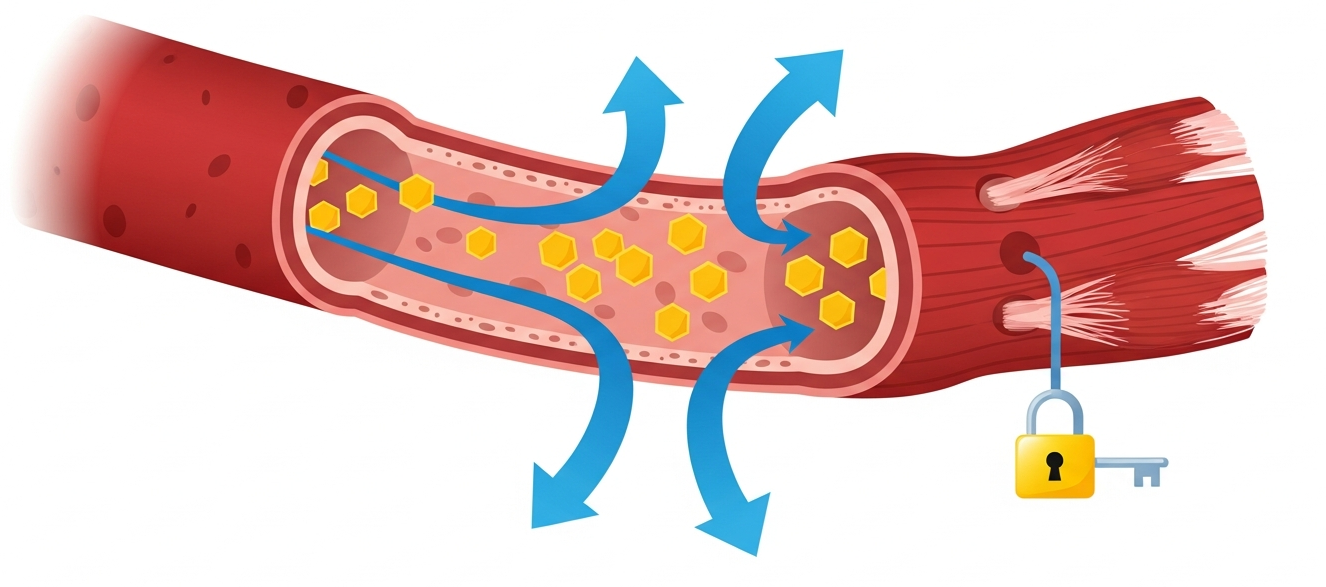
Skeletal muscle acts as a 'glucose sink,' absorbing sugar from the bloodstream to improve insulin sensitivity and stabilize metabolic health.
Muscle is the largest site of glucose disposal in the human body. By maintaining high-quality muscle mass, you effectively create a "glucose sink" that clears sugar from your bloodstream after meals. This is particularly vital for patients managing diabetes, as it enhances insulin sensitivity and stabilizes blood glucose levels, turning your skeletal muscle into a primary tool for metabolic health.
The Relationship Between Muscle Mass and Basal Metabolic Rate (BMR)
Your BMR is the energy your body burns at rest. Because muscle is more metabolically active than fat, having more lean muscle mass increases your daily caloric burn. If you lose muscle while losing weight, your metabolism slows down, making it exponentially harder to maintain your new weight once you stop taking your medication.
Preventing "The Rebound": How Muscle Protects Your Progress After Stopping GLP-1s
The "rebound" weight gain often seen after discontinuing GLP-1 medications is frequently the result of a depressed BMR caused by prior muscle loss. By preserving muscle throughout your treatment, you ensure that your body remains efficient at burning fuel even after the medication's appetite-suppressing effects diminish. Muscle is your best insurance policy against regaining lost fat.
The "Low-Appetite" Protein Protocol: Strategies for Success
Setting Realistic Protein Targets: The 1.2g to 1.6g/kg Rule
To protect muscle in a deficit, you must exceed the standard dietary guidelines. Aiming for 1.2 to 1.6 grams of protein per kilogram of body weight is essential. This high intake provides the necessary amino acids to trigger MPS, ensuring your body has the building blocks it needs to repair tissue despite the calorie-restricted environment.
Overcoming Early Satiety: Small, Frequent, High-Protein Meals
GLP-1s often cause early satiety, making it difficult to finish a large, protein-dense meal. The solution is to transition from three massive meals to five or six smaller, high-protein portions throughout the day. This keeps your blood amino acid levels stable without overwhelming your digestive system, preventing the discomfort that can lead to skipping meals.
The Role of Liquid Nutrition: Using Whey Protein and Essential Amino Acids (EAAs)
When whole foods feel unpalatable due to medication-induced nausea, turn to liquid nutrition. A high-quality whey protein isolate or an EAA supplement provides concentrated muscle-sparing amino acids without the bulk of fiber or fat. These are "low-friction" tools that allow you to hit your protein targets even on days when your appetite is at an all-time low.
Timing Your Intake: Maximizing Muscle Protein Synthesis (MPS) Around Training
Try to consume a significant portion of your daily protein within the window surrounding your workout. By delivering amino acids to your muscles while they are sensitized by resistance training, you maximize the efficiency of protein utilization, ensuring that every gram of protein works toward preservation rather than just maintenance.
Resistance Training: The Essential Signal for Muscle Preservation
Why Strength Training Must Take Priority Over Traditional Cardio
While cardio burns calories, it does not provide the mechanical tension required to signal your body to hold onto muscle. Strength training is the only stimulus that tells your body, "I need this muscle to survive these loads." If you only have limited energy, prioritize lifting weights over excessive cardiovascular exercise.
Focusing on Compound Movements: Squats, Deadlifts, and Presses for Maximum ROI
Compound movements engage multiple muscle groups simultaneously, providing the highest hormonal and neural return on investment. Exercises like the goblet squat, overhead press, and row are highly efficient, allowing you to stimulate significant muscle mass in a shorter amount of time, which is ideal if you are managing fatigue.
The Importance of Progressive Overload While in a Caloric Deficit
Progressive overload—the process of gradually increasing the weight, reps, or sets—is the fundamental rule of muscle growth. Even while in a deficit, your goal is to match or slightly exceed your previous performance. This consistent stress is the only way to convince your body that muscle tissue is non-negotiable.
Low-Impact Alternatives: Using Resistance Bands and Yoga to Maintain Functional Strength
If traditional gym weights are intimidating or physically taxing, resistance bands and bodyweight movements are excellent alternatives. They provide the necessary tension to maintain muscle tone and functional strength without the joint stress of heavy plates. Consistency with low-impact resistance is far superior to sporadic high-intensity training.
Navigating GLP-1 Side Effects to Stay Consistent in the Gym
Managing "GLP-1 Fatigue": Optimizing Mitochondrial Energy Efficiency
Fatigue is a common byproduct of the sudden metabolic shift. Focus on nutrient density to support mitochondrial health. Prioritize vitamins B12 and D, and ensure you are getting adequate sleep. Remember, training sessions do not need to be two hours long; a focused 30-minute session is far more productive than skipping a workout due to burnout.
The Hydration-Electrolyte Connection: Preventing Muscle Cramps and Weakness
GLP-1 medications can cause rapid fluid loss, which often leads to electrolyte imbalances that masquerade as "fatigue" or "weakness." If you feel sluggish, increase your intake of sodium, magnesium, and potassium. Proper hydration is the foundation of muscle contraction; without it, your training intensity will inevitably suffer.
Strategic Carbohydrate Positioning: Fueling Workouts Without Triggering Nausea
If you struggle with nausea, place your carbohydrate intake strategically around your workouts. Carbs provide the glucose needed for anaerobic performance. Eating a small amount of easily digestible carbohydrates an hour before training can provide the energy boost needed for a productive session without triggering the digestive discomfort associated with heavier meals.
Adjusting Intensity: Why Slow and Steady Beats HIIT During the Initial Titration Phase
Do not force high-intensity interval training (HIIT) while your body is adjusting to medication. The systemic stress of HIIT can be counterproductive during titration. Focus on slow, controlled resistance training. Quality, controlled reps are the key to building muscle and avoiding injury while your body chemistry is in flux.
Tracking Progress Beyond the Scale
Why the Standard Scale Lies During Body Recomposition
The scale only measures your total mass, not the composition of that mass. You may lose fat and gain muscle simultaneously, leading to a scale that doesn't move, even while your body fat percentage drops. Relying solely on the scale during body recomposition is a recipe for discouragement; it is a lagging indicator at best.
Utilizing DEXA Scans and Bioimpedance Scales for Accurate Data
Invest in a more accurate way to measure your progress. A DEXA scan provides a gold-standard breakdown of fat mass, lean tissue, and bone density. If a DEXA isn't accessible, a consistent bioimpedance scale can track trends over time. Having real data about your muscle mass keeps you focused on the long-term objective of health, not just a number on a display.
Functional Metrics: Tracking Grip Strength and Rep-Max Improvements
How you feel and perform is just as important as how you look. Track your gym performance. If you are getting stronger, your muscle tissue is being preserved. Increased grip strength or hitting a new rep maximum are objective markers that your metabolic engine is getting stronger, regardless of what the bathroom scale reports.
The Importance of "Non-Scale Victories": Clothing Fit and Energy Levels
Pay attention to how your clothes fit and your daily energy levels. These are "non-scale victories" that signify genuine physical changes. Feeling stronger, having more stamina during the day, and noticing improved muscle definition in the mirror are all signs that your strategy is working.
Scientific Frontiers: The Future of Muscle-Sparing GLP-1 Therapies
The future of metabolic medicine is shifting toward "muscle-sparing" strategies. Research into ActRIIA/B inhibitors, which modulate myostatin to promote muscle growth, suggests that future pharmacological interventions may allow for fat loss without any muscle degradation. While these treatments are still on the horizon, staying informed empowers you to make better decisions in your current journey.
Conclusion
Building muscle while using GLP-1 medications requires a deliberate shift in perspective. By treating your muscles as a vital metabolic insurance policy, prioritizing high-protein intake, and committing to progressive resistance training, you can defy the standard narrative of "skinny fat" weight loss. Remember: the scale is only one data point. Your long-term success is dictated by your metabolic health and your ability to maintain a strong, functional physique. By implementing these protocols, you aren't just losing weight—you are building a stronger, more resilient metabolic engine for the rest of your life. Stay consistent, track your progress through strength and body composition, and trust the process of building long-term health.